Tuesday, April 30, 2013

Book review: The Mists of Avalon by Marion Zimmer Bradley

Not much of a plot summary to provide for this one, since it’s a re-telling of classic Arthurian legend, but from the perspective of the women. And if you’re unfamiliar with Arthurian legend, get thee to Wikipedia, or Cliff’s Notes, or something.

The three main perspectives we get in the novel are that of Igraine, wife of Uther Pendragon and Arthur’s mother; Morgaine, known more commonly as Morgan le Fay and half-sister of Arthur; and Gwenhyfar, more commonly known by the non-Welsh spelling of her name, Guinevere. Igraine’s narrative provides the first part of the book, where we learn how she was more or less manipulated by her sister, Viviane, into marrying first Gorlois, Duke of Cornwall, and then Uther Pendragon, destined to be High King. Though it doesn’t take long for Igraine to feel what she believes is love for Uther, she is still suspect that she has been spelled into her feelings. This first section sets up two recurring themes that are of chief importance in the novel: first, much of what the traditional narrative frames as masculine conquest and male power is actually equally influenced by the machinations of women (particularly those at Avalon); secondly, much of this influence goes unrecognized by the world outside of Avalon, so the primary importance of women still seems to be, to most people, producing an heir.

The majority of the book is a third-person narrative that focuses on Morgaine, though we do get periodic chapters from Gwenhyfar’s angle. Because Morgaine/Morgan le Fay is usually classically portrayed as an evil sorceress, Bradley’s take on her here is an attempt to fill in the second side of the story. Usually, the motivation ascribed to Morgan is that she wants to dethrone Arthur and torment Guinevere; here, we see that her struggle is less about who the High King and Queen are, and more about preserving the Celtic paganism that is being increasingly eradicated in the face of a seemingly militant and oppressive Christianity. The paganism is friendly to and inclusive of women and, indeed, worships a Goddess, while Christianity appears how we’re familiar with it in that time: overly pious, concerned with sin, and overtly patriarchal. Given Morgaine’s view of how Christianity treats women, it makes sense that she would be wary of a High King that increasingly allows this religion to dominate the land and cause Avalon, one of the last remaining vestiges of pagan worship, to disappear into the mists.

Gwenhyfar is the counterpoint to Morgaine’s perspective, as the Christian Queen who grew up first with a negligent/borderline emotionally abuse father and then was placed in a convent. Exceedingly pious, she struggles against what she feels are sinful thoughts and desires. She is chiefly instrumental in the slow but eventual conversion of Arthur and his Court to Christianity, despite his loyalties being previously pledged to Avalon.

From what I saw on Goodreads, it seems like people either love or hate this book. Personally, I liked it a lot, but I won’t say that it was easy or quick to get through. It was kind of a daunting assignment to give myself during a speed read — I had to pick up several shorter books while in the midst of reading this to re-energize my mind. It’s a long (~900 pages) and rather disheartening account, since giving the women back their voices doesn’t, unfortunately, give them happy lives. I liked the humanization of Morgaine and the real talk about how oppressive Christian doctrine can be, so even though I knew it was coming, it was still depressing when Avalon eventually receded out of consciousness, taking its paganism with it.

The Mists of Avalon is basically considered a modern classic at this point. I highly recommend it if you’re a fan of Arthurian legend and/or feminist literature. I’ve seen some weird discussions on whether or not this is actually feminist because the female characters aren’t all exactly liberated and don’t have a ton of agency, but to me those criticisms miss the point. Though Bradley takes some liberties with the myth, I don’t feel that the point was to write a whole new story were Morgaine, Igraine, and Gwenhyfar were, like, the Warrior Women of the Round Table, or something. It just seems like a nice shift of the conversation to actually engage the women, rather than have them as cheerful background baby-makers and off-set seductive sorceresses.

Book review: Ghost Planet by Sharon Fisher

Goodreads summary: Psychologist Elizabeth Cole prepared for the worst when she accepted a job on a newly discovered world—a world where every colonist is tethered to an alien who manifests in the form of a dead loved one. But she never expected she’d struggle with the requirement to shun these “ghosts.” She never expected to be so attracted to the charming Irishman assigned as her supervisor. And she certainly never expected to discover she died in a transport crash en route to the planet. 
 
As a ghost, Elizabeth is symbiotically linked to her supervisor, Murphy—creator of the Ghost Protocol, which forbids him to acknowledge or interact with her. Confused and alone—oppressed by her ghost status and tormented by forbidden love—Elizabeth works to unlock the secrets of her own existence. 

But her quest for answers lands her in a tug-of-war between powerful interests, and she soon finds herself a pawn in the struggle for control of the planet…a struggle that could separate her forever from the man that she loves.

This book was the April selection for the Vaginal Fantasy Hangout, so I picked it up expectantly… and literally didn’t put it down until about 9 hours later once I’d read it completely. Thank god I work in an isolated space, because I am ashamed to admit that I took a holiday at my desk yesterday and was completely absorbed in this book. Sharon Fisher, I blame you for rising workplace delinquency! Kind of.
Anyway, let me get a few nitpicks out of the way, with the acknowledgement that for some people who have been discussing Ghost Planet on Goodreads, they are more than minor nitpicks. I did feel that the worldbuilding was a little lacking — the planet is described as having taken on ecological characteristics similar to Earth in order to be pretty recognizable to the colonists. In one sense, this is a nice shorthand, since we can fairly easily imagine a less populated, less polluted Earth. On the other hand, it functions to deprive us of what could have been some more thoughtful descriptions of the planet and the process of that adaptation, and more detail about the settlements that the colonists live in. Another related issue, which may be more due to its ‘sci-fi lite’ status than to a unique deficiency of this book, is that outside of the special attention paid to Elizabeth’s particular research (which I’ll get to later,) the futuristic technology which enables the colonization of this planet (e.g. space travel, any terraforming concerns?) and that which is used by the colonists (flat-reader) is given no description practically at all. If I had to guess, a “flat-reader” is a tablet computer, but why not just call it a tablet, unless it’s actually a futuristic descendent of a tablet? In which case, what makes it so? Anyway, little things like that make the sci-fi geek in me wish there was a little more in the way of techie detail.

At the end of the day, though, if an original concept and a well-paced plot that do that concept justice are set in front of me, I am going to completely forget about other minor concerns and just love the shit out of a book. And that’s basically what happened. I loved the main character, both as a personality and as a scientist. I read a lot of doom-and-gloom dystopia that tends to paint scientists as misanthropic megalomaniacs with unethical aspirations toward human purity or genetic cleansing, so it was refreshing to have a protagonist who is as empathetic as she is pragmatic. She actually explicitly employs the scientific method, which is pretty darn cool: she has a hypothesis, gathers data to support it, but also considers other possibilities and doesn’t reject them until she has absolutely enough evidence to do so. Not surprisingly, a character like this reasons well with others and builds a totally believable team of support, both from secondary characters and from me, who really wanted her to succeed in love and life!

I really highly recommend this. It was addictive and a great mix of psycho-biological drama and romance, and a really promising debut novel from this author.

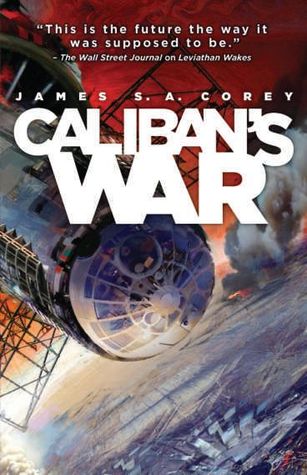
Book review: Caliban's War by James S. A. Corey

Goodreads: “We are not alone.

The alien protomolecule is clear evidence of an intelligence beyond human reckoning. No one knows what exactly is being built on Venus, but whatever it is, it is vast, powerful, and terrifying.

When a creature of unknown origin and seemingly impossible physiology attacks soldiers on Ganymede, the fragile balance of power in the Solar System shatters. Now, the race is on to discover if the protomolecule has escaped Venus, or if someone is building an army of super-soldiers.

Jim Holden is the center of it all. In spite of everything, he’s still the best man for the job to find out what happened on Ganymede. Either way, the protomolecule is loose and Holden must find a way to stop it before war engulfs the entire system.”


This sequel to Leviathan Wakes picks up some time after that book leaves off, following the same central characters and adding a few new ones. I had really enjoyed the first book, and I have to say, I think I like this one even better. Any criticisms I have of this book are essentially the same as those that I had of the first: namely, that it could have benefited from a bit of editing for length and that the dialogue was sometimes a bit pedestrian. Otherwise, I think that the story here moves even more quickly than it did in Leviathan Wakes, even considering the addition of  three more character POVs. Part of the improvement in pacing, I think, comes from the fact that the interspersed character stories, though starting out in different places, were more apparently related right off the bat and converged more quickly.

Our new friends are Prax, a biologist, Avasarala, a UN bigwig, and Bobbie, a Martian foot soldier. Avasarala and Bobbie, particularly, provide insight into the upper levels of the political drama and intrigue of the “inner planets” (Earth and Mars) that was only hinted at in the former novel. These perspectives added complexity to the overall galactic drama by indicating that there are more opposing factions than just inner vs. outer planets; rather, as one might expect, there are groups within the governments on Earth and Mars with their own secretive agendas.

I don’t know that I have too much else to say about this one, because despite it being great, it is a sequel, so I probably have to sell you on Leviathan Wakes first. And then if you like it, definitely pick this one up!

Tuesday, March 19, 2013

Book review: Daughter of Smoke and Bone + Days of Blood and Starlight by Laini Taylor

Goodreads summary of “Daughter of Smoke and Bone”: Around the world, black handprints are appearing on doorways, scorched there by winged strangers who have crept through a slit in the sky.
 
In a dark and dusty shop, a devil’s supply of human teeth grown dangerously low.

And in the tangled lanes of Prague, a young art student is about to be caught up in a brutal otherworldly war.

Meet Karou. She fills her sketchbooks with monsters that may or may not be real; she’s prone to disappearing on mysterious “errands”; she speaks many languages–not all of them human; and her bright blue hair actually grows out of her head that color. Who is she? That is the question that haunts her, and she’s about to find out.

When one of the strangers–beautiful, haunted Akiva–fixes his fire-colored eyes on her in an alley in Marrakesh, the result is blood and starlight, secrets unveiled, and a star-crossed love whose roots drink deep of a violent past. But will Karou live to regret learning the truth about herself?

I’m not going to summarize the plot at all for the second book, “Days of Blood and Starlight,” because that gets into spoiler territory, and this is one of those YA series where if you read the first book and like it, you’re probably going to read the whole series. So up there is the hook for “Smoke and Bone,” and I’ll just more generally opine on concepts and themes across the two for the rest of the review.

One of the first things I found myself quickly enjoying was the female friendship between Karou and Zuzana. There was an authenticity to it that struck me as somewhat unique for the genre. In my experience, a lot of the female protagonists from the ‘high-concept’ YA of late (I’m thinking about the various urban fantasy, dystopian, etc series that are ubiquitous now) are either lone-wolf types or their closest friend is a guy. And that shouldn’t be notable, except that it’s essentially a trope now that the closest-guy-friend is inevitably one of the points in the coming love triangle. Anyway, Karou is a would-be lone wolf: she literally leads a double-life, and since the hidden part of her life revolves around things of a supernatural nature, she isn’t exactly forthcoming to anyone, at first, with personal information. However, her strong-willed best friend Zuzana eventually becomes familiar with Karou’s secret life, and though Zuzana isn’t equipped to be an active participant in that world the way Karou is, she’s a great tether for Karou to the human world. These girls have a friendship based out of genuine mutual respect and fondness for each other, so their dialogue and banter seemed strikingly real and not always forced by a requirement to advance the plot.

As far as Karou herself: I like her, but I wouldn’t say she’s my new best friend. There’s no concrete reason for that, really. She’s got the qualities I like for a female protagonist in this genre: among other things, she’s capable, pragmatic, creative, thoughtful, brave, and a little sassy. It’s possible that how she develops as a character becomes a little too fantastical for me to relate to her, directly, but that’s fine. I don’t need to be drinking buddies with every heroine of every book.

Taylor’s writing is really descriptive and beautiful, so her world-building is pretty top notch. I liked that she used an unusual location like Prague as the backdrop for her story, as opposed to a more commonly selected city like London or New York. I’m definitely interested to check out other books of hers based on what I’ve read here. I think the weakest aspect of the story, for me, was actually the romance. It’s partly my bias as a reader, because I don’t always respond well to the star-crossed lovers narrative, and that’s what is happening here (with characters explicitly referencing “Romeo and Juliet” in case it wasn’t already obvious enough.) I like to read about love being built on something a little more than “He saw her across the square, and she was beautiful, and he was drawn to her in a cosmic way.” (That’s just me, not a quote from the book. Taylor did it better than that, I promise.) Even across two books, not much of a foundation for their One True Love is built, though at least in the second it’s arguable that they both influence the other’s actions for the better, so that’s something.

All together, this is another very fun YA urban fantasy series, and I’m looking forward to the next book/books. I have no idea how many books it’s going to be by the end, but it’s certainly not done at the end of Blood and Starlight. So overall this is recommended, especially if you are a high-concept YA lover like me.

Monday, March 11, 2013

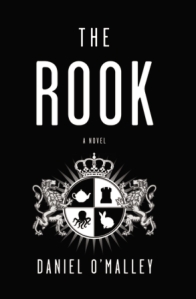
Book review: The Rook by Daniel O’Malley

Goodreads summary: “The body you are wearing used to be mine.” So begins the letter Myfanwy Thomas is holding when she awakes in a London park surrounded by bodies all wearing latex gloves. With no recollection of who she is, Myfanwy must follow the instructions her former self left behind to discover her identity and track down the agents who want to destroy her. 
 
She soon learns that she is a Rook, a high-ranking member of a secret organization called the Chequy that battles the many supernatural forces at work in Britain. She also discovers that she possesses a rare, potentially deadly supernatural ability of her own. 

In her quest to uncover which member of the Chequy betrayed her and why, Myfanwy encounters a person with four bodies, an aristocratic woman who can enter her dreams, a secret training facility where children are transformed into deadly fighters, and a conspiracy more vast than she ever could have imagined.

Thank you so much to all of the Cannonballers who recommended this! This book was a joy to read. I loved the characterization, the world-building, the mystery, and the humor. Oh, the humor! Both Myfanwys (rhymes with Tiffany) are full of delightfully wry quips and keen observations, and some of the other characters — particularly Ingrid, Myfanwy’s assistant — get in some good lines as well.

To elaborate a bit on some of the broad categories I just threw out there: first off, the characterization of Old Myfanwy (the one in the letters) vs. New Myfanwy (the one we read about in the present) is pretty stellar. Though most of the side characters don’t realize that NM is basically a new person, waking up after having her memory completely wiped of everything, they know something is different about her. OM is described as very, very good at her work, but very passive, non-confrontational, shy, and kind of a pushover. NM, on the other hand, speaks her mind candidly and has no issue taking control. That said, we the readers, being privy both to NM’s internal monologue and OM’s letters to NM, can see that both of these seemingly opposite personalities do spring from the same inherent foundation. Both are witty, observant, creative, and opinionated; it’s just that only one of them actually says out loud what she’s thinking. It’s a fun way to deconstruct the dichotomy of stock characters — the shy one vs. the outgoing one — by making them the same person and highlighting their similarities as much as their differences.

The mystery, here, was revealed in kind of an interesting way. Traditionally, one expects a lot of red herrings before finally getting to the bottom of it. Here, even though the “suspects” are all introduced as such, there aren’t much in the way of diversions or red herrings. I’m trying to dance around spoilers here, so I’ll just say that the initial mystery is actually wrapped up quicker than I expected, and the book goes on to uncover Bigger Bads and also give Myfanwy more time to acclimate to her life. In a lot of books, this would seem like weird filler, but in this one, the concept of Myfanwy basically being a newborn (though imbued with at least an adult level of common sense and some sort of formal education, I guess) and needing to learn her way through her highly unusual job is clever and entertaining enough that I still enjoyed sticking with her. The only way, I think, in which this kind of dragged is that sometimes, a chapter with New Myfanwy would end in a cliffhanger, and the next chapter would be a letter from Old Myfanwy. The letters are always relevant to the portion of the story we’re reading, as the implication is that NM had read that letter and would therefore be prepared for whatever she’s facing by the contents of that letter. So it makes sense why they are there, but they’re a little bit of a cheat in setting up the backstory. In any case, most of the time I liked the letters because I liked OM’s narration, but when they get stuck after a cliffhanger, I got impatient. It’s kind of easily fixed, though, by going to the next chapter and then coming back to the letter. And I did want to go back to the letters, because they were interesting!

Overall, this is my favorite book I’ve read so far for the Cannonball. I don’t really have much more to say beyond that.

Book review: Before I Fall by Lauren Oliver

Goodreads summary: What if you only had one day to live? What would you do? Who would you kiss? And how far would you go to save your own life?

Samantha Kingston has it all: looks, popularity, the perfect boyfriend. Friday, February 12, should be just another day in her charmed life. Instead, it turns out to be her last.

The catch: Samantha still wakes up the next morning. Living the last day of her life seven times during one miraculous week, she will untangle the mystery surrounding her death–and discover the true value of everything she is in danger of losing.

There is another blog I read, Forever Young Adult, that is aimed at a crowd they call “a little more A than Y” and serves up (among other things) reviews of YA books. Despite their site slogan, they still have a category for books that fall into the inverse: “a little more Y than A.” That category is where I’d place Before I Fall.

This is not a bad book by any means. In fact, technically speaking, it’s pretty great; but, despite its Groundhog Day conceit and superb character arc, it was difficult for me to enjoy. This is, in part, due to the authenticity with which Oliver captures the adolescent voice, which is one of those technically-speaking “good things” I was talking about. To read such a voice now, though, without any of the trappings of dystopia or paranormal fantasy that so much of popular YA these days revels in, feels uncomfortable and un-relateable. At the beginning of the book, Sam is one of the Mean Girls. She and her three best friends aren’t Mary Sue popular girls who are pretty and smart and also nice — they’re bullies, and they lie, cheat, and steal. We aren’t supposed to like these girls, and Oliver candidly lays their nasty qualities out without any hint of apologia. It’s risky, because she risks alienating readers by giving us a purposefully shallow, vain, and unsympathetic protagonist. And I almost was alienated. Not only was I struggling through the earnestly presented “typical teen issues,” but I was also given a lead who was the kind of person I wouldn’t have cared to befriend, even as a teenager.

But then, somehow, throughout the book, she helps us understand the Mean Girls better. She doesn’t redeem them, per se, but Sam comes to see herself and her friends as others do (“I am a bitch,” she tells one of the girls they bullied, not looking for sympathy or forgiveness, just stating it as a fact.) Another interesting choice that gives the girls dimension is that Oliver fleshes out the quality of their friendships. Many times in the Mean Girls narrative (and indeed, in Mean Girls itself) there is the suggestion that the popular girls wouldn’t even be friends if they weren’t bound by their popularity. Oliver turns that on its head a bit and gives us some moments to suggest that there is real friendship there. Even at the end, when Sam is attempting to fix some of went wrong by way of her being a bitch, she doesn’t disavow her shallow, popular friends; rather, she states things she loves about them, but that she now sees the bad that comes with the good.

All of that is to say: I commend Lauren Oliver’s work here. Reading this was literally like tripping and falling back into high school. The characters and angst felt real, and the conclusion of the book was pretty emotional (I won’t admit to crying, but I was misty for sure.) The question for you, would-be reader, is: do you want to go back to high school? I was neither bullied horribly nor a textbook popular girl, and this was already a difficult enough mindset to get back into, so I can only imagine how it could be to relate to anyone on the extreme ends of the popularity spectrum as described here. The book is a quick read, but it’s an emotional investment.

Thursday, February 21, 2013

Book review: Iced by Karen Marie Moning

Goodreads summary: Dani “Mega” O’Malley plays by her own set of rules—and in a world overrun by Dark Fae, her biggest rule is: Do what it takes to survive. Possessing rare talents and the all-powerful Sword of Light, Dani is more than equipped for the task. In fact, she’s one of the rare humans who can defend themselves against the Unseelie. But now, amid the pandemonium, her greatest gifts have turned into serious liabilities.

Dani’s ex–best friend, MacKayla Lane, wants her dead, the terrifying Unseelie princes have put a price on her head, and Inspector Jayne, the head of the police force, is after her sword and will stop at nothing to get it. What’s more, people are being mysteriously frozen to death all over the city, encased on the spot in sub-zero, icy tableaux. 

When Dublin’s most seductive nightclub gets blanketed in hoarfrost, Dani finds herself at the mercy of Ryodan, the club’s ruthless, immortal owner. He needs her quick wit and exceptional skill to figure out what’s freezing Fae and humans dead in their tracks—and Ryodan will do anything to ensure her compliance.

Dodging bullets, fangs, and fists, Dani must strike treacherous bargains and make desperate alliances to save her beloved Dublin—before everything and everyone in it gets iced.

I need to unpack a lot of conflicting feelings about this book. The first thing, off the top of my head, is that I’m definitely a Fever series fangirl, having absolutely devoured them for CBR4. Given that, I’m inclined to give any of these books the benefit of the doubt and then some. But there are just issues here that I can’t completely overlook, despite, again, finishing this in less than a day and being really engrossed in the proceedings.

For one — that summary up there? Sounds like a pretty normal, promising premise to a paranormal romance. Spunky heroine and rakish love interest are both introduced. Except here’s the thing: the spunky heroine, in this case, is 14 years old. Now, nothing happens happens in the book, but there are a lot of significant glances that are “misunderstood” by the young heroine, and some scenes where she is injured and is stripped to her underwear by one of the competing love interests (there are at least 3 that I can count) in order to heal her. Now, I’m not really a pearl-clutcher, generally speaking, nor am I the type to deny 14-year-olds their agency and burgeoning sexuality, but given the tone and content of the prior five books (hint: pretty fucking steamy) it squicks me just a little for the new protagonist to be jailbait. This isn’t exactly meant to be a YA series, and the prior books definitely weren’t. Furthermore, with regards to her agency, it would be one thing if she personally were displaying any kind of romantic notions toward anyone, but she’s not. Instead it’s like there are three guys kind of squabbling over her and her — oh god, I use this term all the time in pop culture criticism but again, I squick myself using it here because SHE’S FOURTEEN — magic vagina. I’m just going to stop there before Pedobear asks to take this review to his bunk.

Also, this sucker is 500+ pages, and honestly, I’d say it could be edited down by at about a third. I wouldn’t exactly say I was flat-out bored, clearly, given how quickly I went through the book; however, there are a lot of, frankly, really tedious scenes where Dani and Ryodan visit an “iced” site, wax Sherlockian about it, and then escape quickly without really learning anything new. I like mysteries and sleuthing stories to kind of drop some hints along the way, to build intrigue and build the case. In this instance, all of the sudden the knowledge-bomb is dropped right at the very end, and it’s not because of a lot of accumulated knowledge from the scenes — it’s because one character does some analysis he could have done at the beginning if he had only thought of it. In the prior five books, the paranormal mystery aspect of the plot was interspersed with the romantic element, and neither felt like they were dragging; here, since the romance has to be tempered because the romantic heroine is 14 years old, the mystery is put under more scrutiny and sometimes falls short.

Overall, since as I said I’m a fangirl, I probably won’t let these issues affect my enjoyment of the series too much, by which I mean, yes, I will unreservedly pick up the next installments and continue to fawn over the prior five. I will need KMM to tread carefully where the young protagonist is concerned, especially since two of her would-be suitors are older, and one considerably so (by which I mean immortal, but since jailbait rules don’t apply to inmortals, let’s say he’s probably meant to be about 30-ish in appearance.) So, in general, there was some definite weirdness afoot here that I wasn’t super satisfied with, but KMM did lay some good foundations for the upcoming novels. I’m categorizing this as 3 stars in wordpress since it’s part of Fever, but really, it’s probably a 2.5 as a standalone.

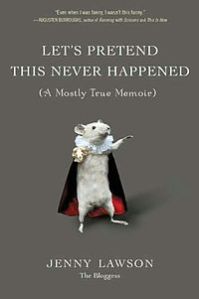
Book review: Let’s Pretend This Never Happened by Jenny Lawson

Reminder for readers of my personal blog: all of my reviews are cross-posted from the Cannonball Read V group blog. Below is what I posted over there, since this book has been reviewed approximately a million times between this and the prior Cannonball. For everyone else who hasn't read all of those reviews, I'll include a Goodreads summary at the end.

So we don’t need to recap this one, right? Since this book has essentially become destined to be reviewed at least once a week? You reap what you sow, cannonballers! If everyone is going to talk about how great it is, the rest of us are going to want to read it!

Anyway, there can’t be much left to say about either the content or the quality of the book. It’s definitely funny, but there is a noticeably more raw quality to the humor and writing that I think is indicative of The Bloggess’ background (blogging, obviously, as opposed to “novelist.”) The humor here is pretty organic, derived from humorous situations, rather than constructed “jokes.” But as we all know, you still need the right wit and timing to re-tell a funny story and have it still be funny, as opposed to “I guess you had to be there,” so Lawson definitely succeeds on that front. You do get a lot of “And then I punched the dog in the face. Just kidding, that didn’t happen. But what actually happened is even worse. I bet you’re getting nervous, but that’s okay, because getting nervous burns calories. So really, you should be thanking me.” Personally, I respond really well to that in blogs, but it felt admittedly weird to be reading it in a hardbound book. I know that makes no sense, but it’s the truth. And since I still did laugh and grow really fond of everyone in the memoir, I’m not going to actually “penalize” the book for my own cognitive dissonance.

So, anyway, recommended, yadda yadda, in case you were waiting for my final say.

Goodreads summary: Jenny Lawson realized that the most mortifying moments of our lives—the ones we’d like to pretend never happened—are in fact the ones that define us. In the #1 New York Times bestseller, Let’s Pretend This Never Happened, Lawson takes readers on a hilarious journey recalling her bizarre upbringing in rural Texas, her devastatingly awkward high school years, and her relationship with her long-suffering husband, Victor. Chapters include: “Stanley the Magical, Talking Squirrel”; “A Series of Angry Post-It Notes to My Husband”; “My Vagina Is Fine. Thanks for Asking”; “And Then I Snuck a Dead Cuban Alligator on an Airplane.” Pictures with captions (no one would believe these things without proof) accompany the text.

Tuesday, February 19, 2013

Book review: The Magician King by Lev Grossman

Goodreads summary: Quentin and his friends are now the kings and queens of Fillory, but the days and nights of royal luxury are starting to pall. After a morning hunt takes a sinister turn, Quentin and his old friend Julia charter a magical sailing ship and set out on an errand to the wild outer reaches of their kingdom. Their pleasure cruise becomes an adventure when the two are unceremoniously dumped back into the last place Quentin ever wants to see: his parent’s house in Chesterton, Massachusetts. And only the black, twisted magic that Julia learned on the streets can save them.
The Magician King is a grand voyage into the dark, glittering heart of magic, an epic quest for the Harry Potter generation. It also introduces a powerful new voice, that of Julia, whose angry genius is thrilling.

I’ll start by saying I liked this sequel better than the first book, The Magicians. I found the pacing to be more consistent, which may be because less narrative ground is covered overall in this story. Chapters alternate between the present, in which Quentin and Julia try to get back to Fillory, and the past, which explain Julia’s backstory.

More importantly, The Magician King worked on redeeming Quentin in my eyes. He’s written here as still flawed, but not insufferable. A big change seems to be that in the first book, despite some moments of insecurity, he still more or less rests on his laurels of being a “genius” and a magician. He’s complacent and egotistical, and especially once he finds out he’s a magician, he flaunts a nauseating superiority complex. However, here in the sequel, as a king of Fillory, he seems to want to do more and prove himself. This change is evident fairly early on, when Quentin insists on embarking on a tax-collecting voyage that others point out doesn’t need to be undertaken by the king of Fillory. Despite their misgivings, Quentin senses an adventure calling to him, and his restlessness at sitting in the castle drives him toward the unexplored destination. When he is directly challenged, such as when he is confronted with Julia’s mastery of street sorcery, he sometimes reverts back to his superciliousness, but overall by the end I’d consider him much more humbled and respectful than he was at the end of the first novel.

The narrative chapters focusing on Julia herself were also an engaging, welcome addition. Her introduction and training in the world of magic is a fascinating — and sometimes devastating — counterpoint to Quentin’s (rather sterile in comparison) magical education at Brakebills. For all of the Brakebills graduates’ posturing about their magical superiority, the trials Julia faces in order to reach the upper echelons of street wizardry seem just as, if not more, challenging than those posed to Brakebills students throughout their education. And though during this go around, Quentin does seem to demonstrate himself as able to solve problems and conjure appropriate spells on his own, Julia demonstrates on numerous occasions that she is just as good, if not better, than he is. The catch, though, is that Julia has achieved all this at the price of part of her soul. She’s no perfect Mary Sue; she’s empathetic and intelligent, but deeply troubled on a level that the other characters don’t understand.

I wasn’t completely satisfied with the end of this book. As much as I rag on Quentin, what ended up happening to him seemed deeply unfair. Since this will allegedly be a trilogy though, I won’t harp too much on it. Overall, I’d say that while the premise and plotline set up in the first book (kid discovers he’s a magician! learns magic! finds new world!) is more immediately gripping than this one (king got shut out of his world and needs to get back! quest for magic artifacts that will let him do that!) the writing is a lot tighter here and the characters slightly more relate-able.

Friday, February 15, 2013

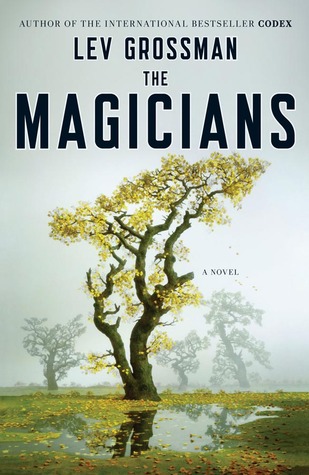
Book review: The Magicians by Lev Grossman

Goodreads summary: “Quentin Coldwater is brillant but miserable. He’s a senior in high school, and a certifiable genius, but he’s still secretly obsessed with a series of fantasy novels he read as a kid, about the adventures of five children in a magical land called Fillory. Compared to that, anything in his real life just seems gray and colorless.
 
Everything changes when Quentin finds himself unexpectedly admitted to a very secret, very exclusive college of magic in upstate New York, where he receives a thorough and rigorous education in the practice of modern sorcery. He also discovers all the other things people learn in college: friendship, love, sex, booze, and boredom. But something is still missing. Magic doesn’t bring Quentin the happiness and adventure he though it would.

Then, after graduation, he and his friends make a stunning discovery: Fillory is real.”

I’m honestly pretty conflicted about this book, and conflicted about my reasons for being conflicted. (Does “conflicted” look like it’s not a real word yet?)

Let’s start with the good: world-building. Plot. Clever and sincere homage to its forebearers (Harry Potter, Chronicles of Narnia.) Interesting and important female characters (about whom Grossman achieves a successful distinction of how he feels versus how Quentin feels.) There’s a good mix of drama and light-heartedness, and enough intrigue to keep me moving through the story pretty quickly.

Now, onto my issues. First and foremost, I’ll start with the minor quibble that the pacing was sometimes weird. My understanding is that this series is meant to be a trilogy, and Grossman clearly has a lot of story he wants to pack in here, but the progression of time while Quentin was at Brakebills was sometimes disjointed and confusing. I can see that Grossman didn’t really intend for this to be a story about Quentin’s time in magic school, and that he wanted to focus more on what came after, but what we got were oddly focused chapters on minor events, such as a game of Brakebills’ version of Quidditch that none of the characters were even that interested in, and then two sentences to indicate that an entire semester had passed by.

Moving right along to my major issue: Quentin is probably the least likeable protagonist I’ve read in some time. And see, I’m not usually the kind of person that needs “likeable” characters in order to enjoy a story. In fact, I often come out in defense of unlikeable characters; I don’t need to love everyone, and oftentimes, the unlikeable people are pretty complex and interesting. But it was damn near impossible to empathize with Quentin, or even to really understand what his importance was. One of my main pet peeves in fiction is when there is a lot of exposition or dialogue between other characters that tells me what a character’s significant traits are rather than demonstrating that the character is those things through their words and actions. This pet peeve was provoked in a major way with Quentin. It’s beaten into our heads how brilliant he is, but all throughout the book he seems to achieve things mainly through luck or by being surrounded by a lot of other really brilliant people who seem to know much better than him what they’re doing. This would be one thing if Quentin were an unreliable narrator, calling himself brilliant, but when the omniscient narrator and all of Quentin’s extremely talented friends are saying so, it comes across as grating and discordant with what I’m actually reading. Don’t get me wrong; the kid certainly has “above average” intelligence, but there is a disconnect between the superlatives used to describe him and his actual presentation.

All of that alone I could accept, except that he’s also sullen, entitled, and even cruel at times. And although he seems to acknowledge his shortcomings, and the other characters sometimes call him out on his crap, it’s not enough to wink at the reader and say, “See? I know this kid is a little shit sometimes,” if he doesn’t ever seem to learn from his mistakes. I know people aren’t perfect, and that many of us like to make the same mistakes over and over again too, but I guess I like seeing a little growth in my fictional characters. It stops being compelling, after awhile, to read about someone who has experienced so many incredible things, with such highs and lows, but doesn’t really change because of them.

When all was said and done, this book was still an enjoyable entry in the urban/modern fantasy genre, and I quickly picked up the sequel as well (review on that forthcoming.) I’d recommend reading this, but with the caveat that you just might hate the protagonist.